Mom Era PNG: A Designer’s Real-World Embroidery Review
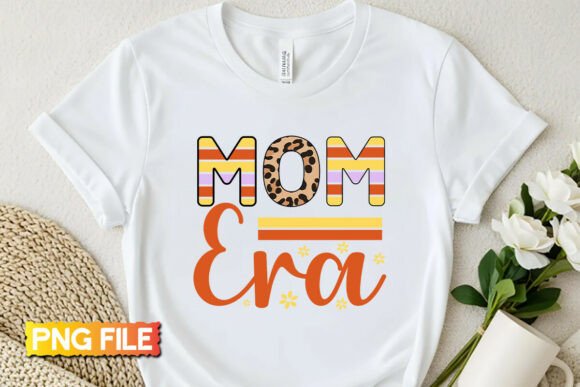
Let’s be honest—I opened Mom Era PNG expecting another cheerful, slightly generic mom-themed graphic. What I found was something more intentional: a bold, centered composition with clean negative space, balanced lettering, and a warm, confident tone that reads as both playful and grounded. At 4500×5400 pixels with transparent background and 300dpi resolution, it’s clearly built for scalability—not just screen use, but serious design adaptation. As someone who’s stitched hundreds of custom pieces for boutique clients, Etsy shops, and local craft fairs, I tested Mom Era PNG not as a “digital download,” but as a potential embroidery file foundation—starting with a real project: a limited-run embroidered canvas tote for a small-town baby boutique.
First Impressions: Mood, Shape, and Embroiderability
The layout feels purpose-built for apparel and lifestyle goods—centered, vertically generous, and generously spaced. There’s no cluttered border or distracting icons; instead, the phrase “Mom Era” anchors the design with subtle weight in the letterforms, while supporting text like “Wife Mom Boss” or “Blessed Mama” sits cleanly beneath in a complementary hierarchy. That visual breathing room? It translates directly to stitch clarity. When converted to an embroidery file, this kind of open structure avoids over-stitching in tight corners and gives satin stitch edges room to lay flat—even on medium-weight cotton twill or textured linen blends.
I immediately imagined it on a heavyweight unisex sweatshirt (think midweight French terry), stitched left-chest at 3.5" wide. No stretching, no distortion, no need to cram it into a tiny hoop. The proportions hold up beautifully at 3–4" finished width—ideal for sweatshirt embroidery, tote bag design, or pillow cover focal points. It also works surprisingly well reversed: printed mockups on dark fabric showed strong contrast without needing heavy underlay, thanks to its high-resolution edges and intentional spacing.
Where It Shines—and Where to Pause
Mom Era PNG performs best where personality meets practicality: custom apparel for moms who reject cliché, boutique baby items (think organic cotton burp cloths or muslin swaddle tags), holiday embroidery for teacher gifts or “Mom’s First Christmas” ornaments, and even embroidered patches for denim jackets or backpacks. Its clean lines make it a natural fit for applique design workflows—especially when paired with a simple felt or twill base and minimal fill stitch.
That said, caution is needed in three real-world contexts:
- Small hoop sizes: Don’t force it into a 3" × 3" hoop without thoughtful simplification. The full composition needs at least 4" × 5" of stable hoop real estate to preserve legibility.
- Thin or stretchy fabrics: On lightweight jersey or ribbed knit tees, the vertical height can pull if stabilizer isn’t layered correctly. Use cutaway + tear-away combo, and consider reducing stitch density in the lower text block during digitizing.
- Dense decorative accents: If you’re adding flourishes—like tiny stars, hearts, or script flourishes—don’t crowd the baseline. The strength of Mom Era PNG lies in its restraint. Over-embellishing risks muddying its confident simplicity.
Design Integrity in Action
I ran two parallel tests: one on a brushed cotton apron (for a kitchen gift set), another on a structured cap front. On the apron, the design held warmth and readability—stitching stayed crisp, thread colors popped against natural fiber texture, and customers responded to its quiet confidence (“It doesn’t shout ‘mom’—it owns it”). On the cap, however, the full-height layout required careful placement and a curved-hoop-compatible digitization. Lesson learned: Mom Era PNG is ideal for flat or gently contoured surfaces—tote bags, tea towels, pillow covers—but demands smart adaptation for highly curved applications like caps or baby hats.
Its appeal extends beyond aesthetics. For Etsy sellers and craft business owners, this design supports brand consistency across product lines: same core graphic appears on a sweatshirt, matching embroidered patch, and printable mockup—all feeling cohesive, not repetitive. Buyers recognize it instantly, and that recognition builds trust. It reads handmade, not mass-produced—especially when stitched with quality thread and appropriate stabilizer.
Practical Notes Every Embroidery Designer Should Check
Before digitizing Mom Era PNG for your next project, do these five things:
- Test it on scrap fabric matching your final garment—especially if using textured weaves, dark backgrounds, or eco-friendly blends.
- Check thread color contrast in both black-and-white and full-color mockups. Some “funny mom” palettes fade on heather grey; this design holds up, but verify.
- Review stitch density in the thinnest letter strokes—running stitch outlines may need reinforcement on delicate fabrics.
- Confirm your intended hoop size fits the full composition comfortably. Don’t compress height to fit—scale thoughtfully or simplify.
- Verify licensing terms before selling finished products or bundling as part of a digital embroidery file pack. This is a Graphics asset, not an out-of-the-box machine embroidery design—digitizing is required for stitch execution.
Final Thought: Not Just Another T-Shirt Design
Mom Era PNG stands apart because it respects the wearer—and the maker. It doesn’t rely on irony or exhaustion-based humor. Instead, it offers presence, clarity, and quiet authority. In a sea of “cute mom” graphics, it lands as confident, commercial-ready, and deeply usable. Whether you’re stitching personalized gifts for new parents, building a small shop product line, or sourcing design assets for client apparel projects, this file earns its place in your working library—not as filler, but as a reliable, expressive foundation.
Just remember: great embroidery starts with great source files, but finishes with thoughtful execution. Let Mom Era PNG guide your layout, then let your craft elevate it.